


Continuous Flow Oxygen Concentrator
Your Professional Continuous Flow Oxygen Concentrator Supplier
Continuous flow oxygen concentrators are supplied for homecare, respiratory care, clinics, hospitals, and other medical oxygen applications. The product range covers different flow requirements from compact low-flow models to higher-flow configurations, with standard specifications covering approximately 1 to 10 LPM.
The systems utilize Pressure Swing Adsorption (PSA) technology to concentrate oxygen from ambient air. Depending on the selected model, configurations include adjustable flow control, oxygen concentration monitoring, pressure protection, power-failure alarms, low-flow alarms, and other essential operating safeguards.

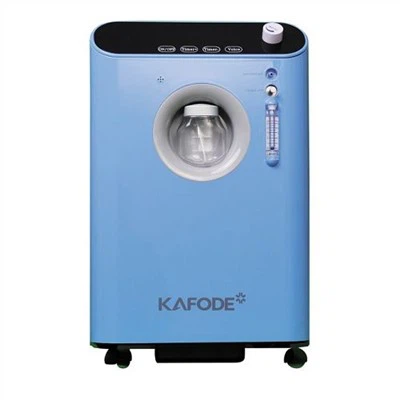


Key Technical Parameters for Selection
|
Technical Parameter |
Engineering Expectation |
Procurement Impact |
|
Flow Rate & Stability |
Adjustable range covering 1 to 10 LPM; must maintain stable delivery under downstream resistance. |
Determines whether unit output matches clinical or institutional prescriptions. |
|
Purity Performance |
Greater than or equal to 90% oxygen concentration at designated maximum continuous flow rate. |
Ensures clinical efficacy and regulatory compliance. |
|
Outlet Pressure |
Pneumatic output ranging from 30 to 60 kPa on standard models. |
Determines compatibility with humidifiers, nebulizers, and extended tubing runs. |
|
Electrical Specifications |
Input power approximately 350 VA; configurable for AC 220 V / 50 Hz or regional voltage standards. |
Dictates export market suitability and operational power costs. |
|
Acoustic Rating |
Sound pressure levels equal to or less than 60 dB(A). |
Critical for noise-sensitive homecare and nighttime clinical environments. |
Alarm and Protection Functions
Continuous operation requires rigorous monitoring of key operating conditions. Depending on the model, oxygen concentrator units integrate the following safety mechanisms:
- Power failure alarm
- High-pressure and low-pressure alarms
- Low oxygen concentration alarm
- Low-flow alarm
- High-temperature alarm
- Voltage protection
- Operating-time and total running-time indication
Applications
Home Oxygen Therapy
Continuous flow oxygen concentrators are utilized in homecare environments where a stable oxygen source is required and the device is connected to a continuous electrical supply. Appropriate oxygen flow and treatment duration should follow applicable clinical prescriptions.
Hospitals and Clinics
Medical facilities utilize stationary oxygen concentrators as a reliable oxygen source for suitable respiratory care applications. Institutional buyers should evaluate flow capacity, oxygen concentration, outlet pressure, electrical requirements, alarms, and operating environment together.
High-Altitude Applications
Oxygen concentrators can be specified for high-altitude environments where ambient air pressure differs from standard conditions. Actual altitude operating limits must be confirmed for the selected model.
A typical PSA oxygen concentrator includes several functional assemblies:
Air Intake and Filtration: Ambient air enters the machine through an intake filter system that protects the compressor and adsorption beds from airborne particulates.
Compressor: Supplies pressurized air to the PSA system. Compressor selection directly dictates flow output, power consumption, noise emissions, and long-term operating durability.
Molecular Sieve Beds: Selectively adsorbs nitrogen from compressed air using cyclical adsorption and regeneration beds.
Oxygen Product Tank: Collects the oxygen-enriched gas before regulation and delivery to the outlet port.
Flow Control System: Allows the operator to set and maintain the required oxygen delivery flow.
Monitoring and Control System: Sensors and control electronics monitor operating conditions and trigger alarms when parameters fall outside safe operating ranges.

How to Choose the Right Continuous Flow Oxygen Concentrator
Define the Required Flow Rate: Start with the required LPM range (1 to 3 LPM for low-flow, up to 5 LPM for general continuous-flow, or 5 to 10 LPM for higher-flow requirements).
Check Oxygen Concentration at the Required Flow: Ensure concentration performance is verified at the target operating flow rather than relying on static percentages.
Confirm Outlet Pressure: Verify that outlet pressure matches downstream delivery configurations.
Check Electrical Requirements: Confirm voltage, frequency, power consumption, plug configuration, and electrical protection for international distribution.
Review Alarm Configuration: Verify monitoring and alarm functions included in the exact model.
Evaluate Physical Configuration: Compare dimensions, net weight, handle/wheel configurations, and shipping weight for warehousing and logistics.
Confirm Certification and Market Requirements: Verify certification documentation applicable to the destination country and device classification.
Confirm OEM and Supply Requirements: Clarify MOQ, branding, packaging, manuals, lead times, and spare parts availability for distributors and private-label buyers.
OEM and Private Label Manufacturing
Product Branding: Front-panel branding, model numbers, rating labels, customized cartons, user manuals, barcodes, and shipping marks.
Product Configuration: Flow configuration, display interfaces, alarm systems, electrical specifications, accessories, housing design, and user interfaces.
Final OEM specifications are validated through technical specification sheets and engineering review prior to volume production.
Manufacturing, Quality Control & Regulatory Dossiers
Continuous-flow oxygen concentrators depend on precise integration across multiple component assemblies:
Incoming Components -> Assembly -> PSA System Installation -> Electrical Assembly -> Functional Testing -> Oxygen Concentration Testing -> Alarm Testing -> Final Inspection -> Packaging
Important Inspection Checkpoints
Oxygen concentration and flow output
Outlet pressure and electrical performance
Alarm operation and compressor performance
Noise emission levels
Display, control functions, and appearance
Packaging integrity
Quality & Regulatory Support for Importers
Production systems operate under ISO9001-certified manufacturing protocols with a scalable annual production capacity of approximately 30,000 units. To support international customs clearance and regulatory compliance audits, the following technical files and reports can be made available for verified projects:
Certificate of Analysis (COA) / Batch test records
Electrical safety and EMC test summaries
Risk management and structural documentation
ISO9001 quality management certificates
Logistics and Packaging Specifications for Importers
Packaging Type
Export-grade reinforced corrugated master cartons featuring custom internal foam cushioning protection.
Unit Protection
Dust-proof protective film layer, shock-absorbing corner pads, and secured accessory compartments (humidifier bottle, nasal cannula, power cord, spare filters).
Palletization
Stackable export pallet configurations available for sea freight containers (20ft / 40ft HQ) or air cargo pallet loads to prevent transit damage and optimize container utilization.
Shipping Documentation Provided
Commercial Invoice, Packing List, Certificate of Origin, Bill of Lading, and Model Datasheets.
FAQ
We're professional continuous flow oxygen concentrator manufacturers and suppliers in China in China, specialized in providing high quality products with low price. We warmly welcome you to buy cheap continuous flow oxygen concentrator made in China here from our factory.
Affordable Oxygen Concentrator, compact oxygen concentrator lightweight design, portable electric oxygen concentrator long duration operation