


Products

Homecare Oxygen Concentrator
A homecare oxygen concentrator is a medical device that produces oxygen to provide oxygen to those who need extra oxygen.
Features
Reliable Product Quality
All our workers are experienced and professional, they have strong cohesion, sense of responsibility and craftsmanship, which guarantee good and stable quality.
Professional Technical Team
Our R&D Team has independent developing ability of the hard & software unit of the product.
Wide Product Range
We produce oxygen concentrators from 1LPM-10LPM, which have been widely applied in homecare, hospitals, clinics, beauty salon, sports and high altitude area etc.
Excellent Customer Service
Each product has been strictly Quality Checked in warehouse before packing. One year warranty is provided for all models. If any problem or damage caused by us, we will solve it for you within 48 hours.
What is Homecare Oxygen Concentrator?
A homecare oxygen concentrator is a medical device that produces oxygen to provide oxygen to those who need extra oxygen. Oxygen concentrators are characterized by rapid oxygen production and high oxygen concentration. The vast majority of medical/homecare oxygen concentrators and new portable oxygen concentrators use molecular sieve physical adsorption technology to separate the nitrogen from the oxygen in the air and ultimately obtain a high concentration of oxygen.

Oxygen Concentrator Machine for Home
High efficiency molecular sieve, stable oxygen output
Novel appearance design and complete functions
Simple operation, stable running, convenient maintenance

Portable Oxygen Machine for Home Use
♦High definition LED screen and super clear reading.
♦With external humidifier bottle design, convenient to cleaned.
♦The oxygen concentrator will provide the function of oxygen and atomization. One machine, two functions.

Oxygen Concentrator 10 Liter Per Minute
Designed for the acquirement of high purity oxygen.
Oxygen concentrator has voltage alarm function, optional oxygen density indicator, current running time, total running hours, timing function, sound and light alarm function of power off, and pressure alarm function.

Oxygen Making Machine for Home
Designed for the acquirement of high purity oxygen.
The adsorption system is controlled by time and pressure, and the parameters can be adjusted according to the maintenance service to keep the performance of the oxygen concentrator in optimal condition.
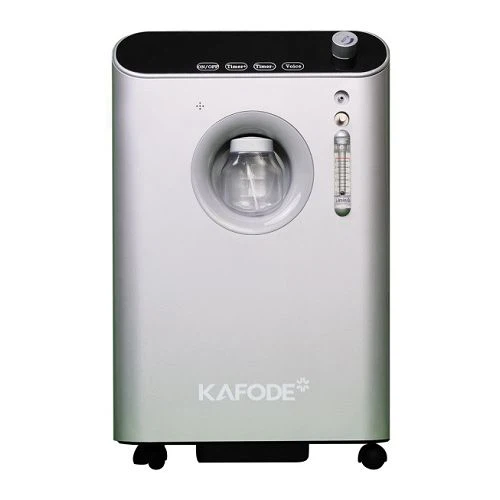
This product can be used for field work, especially in high altitude areas, and can be up to 4800 meters.
It consists of a compressor, filter, molecular sieve adsorption separation device, radiator, control system, flow control system, and so on.

Portable Oxygen Machine for Home
The oxygen flow could be adjusted from 1L-5L/min.
Although it is small in size, it has a very powerful kinetic energy and can provide you with a continuous flow of 5L of oxygen.
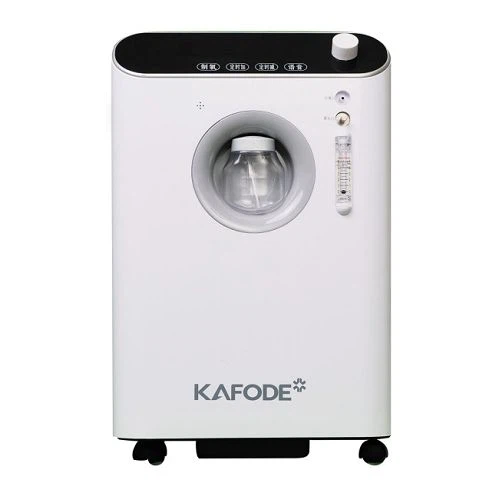
The KAFODE oxygen concentrator has FDA/CE approved certification.
Digital flowmeter adjustable. You can see the real-time oxygen concentration on the screen. The oxygen concentrator is reassuring to use.

KAFODE oxygen concentrator is a very cost-effective oxygen concentrator. Designed for the acquirement of high purity oxygen, it meets the needs of most customers to a great extent.
High bottom wheel design makes the machine convenient to move and carry.

Continuously provide 5L of medical-grade oxygen. It is equipped with a low oxygen concentration alarm function as standard. It is the first choice for the cost-effectiveness of safe oxygen therapy.
Advanced molecular sieve filling technology and cooling technology improve user experience.
Advantages of Homecare Oxygen Concentrator
Portability and Convenience
One of the significant advantages of homecare oxygen concentrators is their portability. Unlike oxygen tanks, concentrators are lightweight and can be easily moved from one room to another. Some models even feature wheels and handles for added convenience, allowing users to maintain their oxygen therapy while on the go. This means that individuals with respiratory conditions can have the freedom to move around their homes or even travel without the burden of heavy equipment. Whether it's going from the living room to the bedroom or taking a trip to visit family, oxygen concentrators provide the convenience of mobility. Furthermore, concentrators eliminate the need for costly and time-consuming oxygen tank refills. With traditional oxygen tanks, patients often have to schedule regular deliveries or visits to refill their tanks, which can be inconvenient and disruptive to their daily routines. Oxygen concentrators, on the other hand, offer a medical-grade oxygen supply without the hassle of refilling. This saves time and reduces the stress and financial burden associated with maintaining a steady supply of oxygen.
Cost-Effectiveness
Another advantage of homecare oxygen concentrators is their cost-effectiveness in the long run. While the initial purchase price may be higher than that of oxygen tanks, concentrators eliminate the ongoing costs associated with refilling tanks. As long as a power source is available, concentrators can provide an uninterrupted supply of oxygen, saving patients money in the long term. This is particularly beneficial for individuals who require long-term oxygen therapy, as the cost of refilling tanks can add up over time. By investing in an oxygen concentrator, patients can enjoy the financial relief of not purchasing or refilling oxygen tanks constantly. Moreover, the cost-effectiveness of oxygen concentrators extends beyond the expenses directly related to oxygen therapy. With the increased mobility and independence that concentrators offer, patients may experience improved overall well-being, potentially saving healthcare costs. By being able to engage in physical activities and social events, individuals may experience better physical and mental health outcomes, potentially reducing the need for additional medical interventions.
Increased Independence for Patients
Homecare oxygen concentrators offer patients the freedom and independence to carry out their daily activities without being tethered to a stationary oxygen source. With portable concentrators, patients can travel, attend social events, and even engage in physical activities with a medical-grade supply of oxygen. This increased independence can greatly improve the quality of life for respiratory patients. Imagine taking a leisurely stroll in the park, visiting friends and family, or going on a vacation without the constant worry of running out of oxygen. Oxygen concentrators make all of this possible by providing a reliable and portable source of oxygen. Whether it's attending a family gathering, going on a cruise, or simply enjoying a day out, patients can experience a newfound sense of freedom and normalcy in their lives.

Stationary oxygen concentrator
A stationary oxygen concentrator weighs about 22 pounds (10 kilograms). It has handles to lift the device or wheels on the bottom to roll it. It runs on electricity, so you plug it into an electrical outlet in your home. In the event of a power outage, some brands of oxygen concentrators come with a battery backup or a backup compressed oxygen tank, so you can still receive oxygen therapy until your power comes back on.
Portable oxygen concentrator
Portable oxygen concentrators are smaller and lighter than stationary ones, allowing for easier activity or travel. But their oxygen output is usually lower than stationary oxygen concentrators. Most portable oxygen concentrators use rechargeable lithium-ion batteries.
Acute Conditions Requiring Homecare Oxygen Concentrator
Asthma
This condition is where your airways become inflamed and begin producing a lot of mucus, which makes it harder to breathe. While there are a number of pharmaceuticals that can treat and control asthma, homecare oxygen concentrator can pump high levels of oxygen into the bloodstream of the patient while they're having or have already had an asthma attack.
Pneumonia
Pneumonia is an infection where you develop inflammation in either one or both of your lungs' air sacs and in many cases, fill them up with fluid. Many pneumonia patients have been prescribed oxygen therapy and have seen good clinical outcomes.
Respiratory distress syndrome (RDS)
RDS is a breathing disorder mostly affecting newborns, particularly those who are born six or more weeks before their delivery date. Newborns suffering from RDS don't create enough surfactant (a lung coating liquid), causing their lungs to collapse and making them work harder to breathe. Oxygen therapy using homecare oxygen concentrators help pump oxygen into the babies' bloodstream and lungs to reduce further complications.
Bronchopulmonary dysplasia (BPD)
Newborns suffering from RDS also have a higher risk of developing BPD. This is a severe lung condition requiring long-term breathing support.
Chronic Diseases that Require Homecare Oxygen Concentrator Therapy
Chronic obstructive pulmonary disease (COPD)
COPD affects around 16 million people, but an oxygen concentrator can be an effective treatment. When you have COPD, you have chronic lung damage which makes it difficult for your lungs to absorb enough oxygen. As a result, you can have difficulty breathing, and oxygen therapy through a concentrator can help.
Cystic fibrosis
You inherit this life-threatening condition. It causes digestive system and lung damage. It's a rare condition that affects the body's cells responsible for producing mucus, sweat, and digestive juices. The fluids are changed which results in a stickier, thicker solution that plugs the ducts, tubes, and passageways of the individual infected.
Sleep Apnea
Sleep apnea is a sleeping disorder that can be serious and cause the individual's breathing to sporadically stop and start during their sleep. Usually, treatment for this condition is continuous positive airway pressure (CPAP), weight loss, and physical exercise, though some people with sleep apnea may require oxygen therapy.
Series of air filters: To filter out all the impurities present in the air.
Air compressor: The primary purpose of the air compressor is to push air into the concentrator and forward it to the molecular sieve beds.
Molecular sieve beds: An oxygen concentrator has two molecular sieve beds that are designed to trap nitrogen.
Switch valve
The function of the switch valve is to switch the output of the compressor between the two molecular sieve bed filters (pressure equalizing reservoirs).
Oxygen outlet
This refers to an opening that delivers purified oxygen to the patient.
Flowmeter
The flowmeter is used to set the flow of oxygen in liters per minute (LPM).
Oxygen concentrators use a combination of filtration and pressure swing adsorption (PSA) technology to separate oxygen from other gases. The process typically involves compressing air, which is then passed through filters to remove impurities. After filtration, the air is directed into a zeolite sieve bed that selectively adsorbs nitrogen, allowing the oxygen to pass through and be collected for delivery to the user.
The filtration stage of an oxygen concentrator plays a crucial role in ensuring that the oxygen delivered to the user is of high quality. Filters remove dust, pollen, and other airborne particles, ensuring that the oxygen is clean and safe to breathe. Some advanced concentrators even have additional filters to remove bacteria and viruses, providing an extra layer of protection.
Once the air has been filtered, it enters the zeolite sieve bed where the PSA process takes place. Zeolite is a crystalline material with a unique structure that allows it to selectively adsorb nitrogen molecules while allowing oxygen to pass through. This process is repeated in cycles, with one sieve bed adsorbing nitrogen while the other regenerates by venting the accumulated nitrogen. This continuous cycle ensures a constant supply of concentrated oxygen for the user.
Modern oxygen concentrators are designed with user-friendly interfaces, allowing individuals to adjust the flow rate of the delivered oxygen according to their prescribed needs. Some devices even have built-in alarms and indicators to alert the user of any potential issues, such as low oxygen concentration or power failure.
Oxygen concentrators have revolutionized the field of respiratory therapy, providing a reliable and efficient means of delivering oxygen to those in need. With continuous advancements in technology, these devices are becoming increasingly compact, lightweight, and portable, further enhancing the quality of life for individuals with respiratory conditions.
The global homecare oxygen concentrators market is witnessing several emerging trends driven by increasing technological advancements and the growing demand for portable and lightweight devices. Portable oxygen concentrators have gained popularity due to their ease of use and convenience, enabling users to carry them during outdoor activities. The market is also witnessing the integration of wireless connectivity and mobile applications, allowing for remote monitoring and improved patient care. Additionally, manufacturers are focusing on developing energy-efficient devices and exploring the potential of wearable oxygen concentrators. Increasing adoption of home healthcare services and the rising geriatric population are expected to fuel the growth of the global homecare oxygen concentrators market further.


It depends on why you need supplemental oxygen. Most people must use supplemental oxygen for at least 15 hours every day. Some people need to use it 24 hours a day. A healthcare provider will direct you on how often to use it and what your output setting should be. If you have a short-term condition, you may only need an oxygen concentrator until you recover. If you have a long-term condition, you may need to use an oxygen concentrator for the rest of your life. A provider will work with you to help you adapt to living with an oxygen regulator. It may take some adjustments, but it shouldn't interfere with your everyday activities, including working, bathing, exercising and traveling.
Choosing the Homecare Oxygen Concentrator That Is Right For You
How does one choose the best HOC for their individual needs?
With dozens of models to choose from, picking an appropriate product may seem like a daunting task. To make the decision easier, it is important to narrow the search by determining which features are most important to the oxygen user's specific needs.
Oxygen Requirements
When picking out the right HOC, the most important factor to consider is how much oxygen will be required. Some of the higher capacity HOC models can output up to 10 LPM. If that flow rate of oxygen is not required, the smaller and less powerful model, producing anywhere from 1 to 5 LPM, may be the superior option.
Budget
The next factor to consider is budget. Not only does the home concentrators have an initial cost, but it will have an ongoing impact on the household electric bill. Much like automobiles, HOCs are constantly becoming more and more energy efficient, and engineers are finding ways to improve their efficiency each year. Unlike POCs, there is no concern about the HOC's battery life. There is no time spent charging batteries, or finances exhausted on replacement batteries. Because HOCs use the home's electricity as their power source, the cost will show on the monthly electric bill. The more oxygen the concentrator produces, the more energy it requires. The more energy efficient models may cost more initially, but can save money in the long run.
Size and Portability
An additional HOC aspect to consider is size. Oxygen concentrators are available in a wide range of shapes, sizes, and weights. Some models are smaller and can fit into tight spaces without a problem, as would be required for a patient in a small apartment or assisted living scenario. Some colors and designs will blend in with the user's room decor, making them less noticeable for the user who is self-conscious about their oxygen therapy. It is important to take an inventory of where the HOC will be used around the home. Consider where, in the home, the majority of time is spent.
Ease of Use
When comparing different HOCs, another important feature to analyze is the model's ease of use. Oxygen concentrators are continually improving. Each new model has new features and settings that are meant to provide the highest possible quality of life. However, with so many different settings, certain models can become confusing to operate. The most useful feature is rendered completely worthless, if a complicated interface prevents the user from knowing how to properly operate their device.
How to Clean Your Homecare Oxygen Concentrator
Tubing or facemask
Wash once a week with warm water and mild dish soap. Clean it more often if you get sick. Let it air dry, and don't let water get in the tube. If the tubing looks damaged, get a replacement from your oxygen supplier.
Humidifier bottle
If you use one, clean it every 3 days with warm water and mild dish soap. Rinse it with hot water. You can also soak it in a mix of vinegar and water for a few minutes to clear out any leftover bacteria. Dry the bottle with a paper tower, then air dry it.
Concentrator filter
Clean it once a month. Take it out and dunk it into a clean container that's filled with water and mild dish soap. Scrub with a washcloth to get rid of any dirt or dust, then rinse it under water to remove any soap residue. Lay the filter on a dry, clean towel and let it air dry completely before you put it back in the concentrator.
Our Factory

Zhejiang Xikang Medical Equipment Co., Ltd is a leading manufacturer specialized in oxygen solutions. Our R&D Team has independent developing ability of the hard & software unit of the product. We produce oxygen concentrators from 1LPM-10LPM, which have been widely applied in homecare, hospitals, clinics, beauty salon, sports and high altitude area etc.
Ultimate FAQ Guide to Homecare Oxygen Concentrator
Hot Tags: homecare oxygen concentrator, China homecare oxygen concentrator manufacturers, suppliers, factory,, Oxygen Machine Small, Oxygen Concentrator for Medical Use, 5 Liter Concentrator, Oxygen Machine Concentrator, Oxygen Concentrator, Portable Oxygen Concentrator
You Might Also Like


Send Inquiry
