


Products

Household Oxygen Generator
A household oxygen concentrator is a device that concentrates the oxygen from a gas supply (typically ambient air) by selectively removing nitrogen to supply an oxygen-enriched product gas stream.
Features
Reliable Product Quality
All our workers are experienced and professional, they have strong cohesion, sense of responsibility and craftsmanship, which guarantee good and stable quality.
Professional Technical Team
Our R&D Team has independent developing ability of the hard & software unit of the product.
Wide Product Range
We produce oxygen concentrators from 1LPM-10LPM, which have been widely applied in homecare, hospitals, clinics, beauty salon, sports and high altitude area etc.
Excellent Customer Service
Each product has been strictly Quality Checked in warehouse before packing. One year warranty is provided for all models. If any problem or damage caused by us, we will solve it for you within 48 hours.
What is Household Oxygen Generator?
A household oxygen concentrator is a device that concentrates the oxygen from a gas supply (typically ambient air) by selectively removing nitrogen to supply an oxygen-enriched product gas stream. Oxygen concentrators are used widely for oxygen provision in healthcare applications, especially where liquid or pressurized oxygen is too dangerous or inconvenient, such as in homes or portable clinics, and can also provide an economical source of oxygen in industrial processes.

Oxygen Concentrator Machine for Home
High efficiency molecular sieve, stable oxygen output
Novel appearance design and complete functions
Simple operation, stable running, convenient maintenance

Portable Oxygen Machine for Home Use
♦High definition LED screen and super clear reading.
♦With external humidifier bottle design, convenient to cleaned.
♦The oxygen concentrator will provide the function of oxygen and atomization. One machine, two functions.

Oxygen Concentrator 10 Liter Per Minute
Designed for the acquirement of high purity oxygen.
Oxygen concentrator has voltage alarm function, optional oxygen density indicator, current running time, total running hours, timing function, sound and light alarm function of power off, and pressure alarm function.

Oxygen Making Machine for Home
Designed for the acquirement of high purity oxygen.
The adsorption system is controlled by time and pressure, and the parameters can be adjusted according to the maintenance service to keep the performance of the oxygen concentrator in optimal condition.
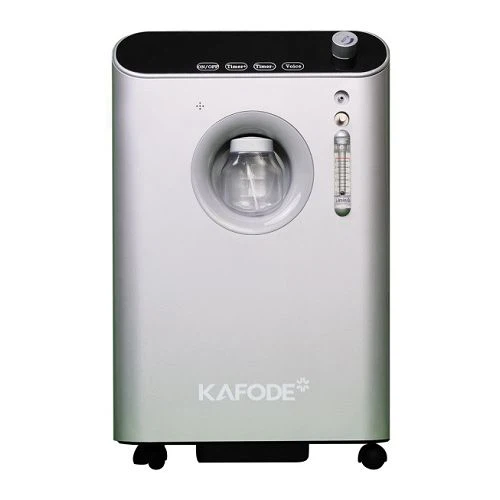
This product can be used for field work, especially in high altitude areas, and can be up to 4800 meters.
It consists of a compressor, filter, molecular sieve adsorption separation device, radiator, control system, flow control system, and so on.

Portable Oxygen Machine for Home
The oxygen flow could be adjusted from 1L-5L/min.
Although it is small in size, it has a very powerful kinetic energy and can provide you with a continuous flow of 5L of oxygen.
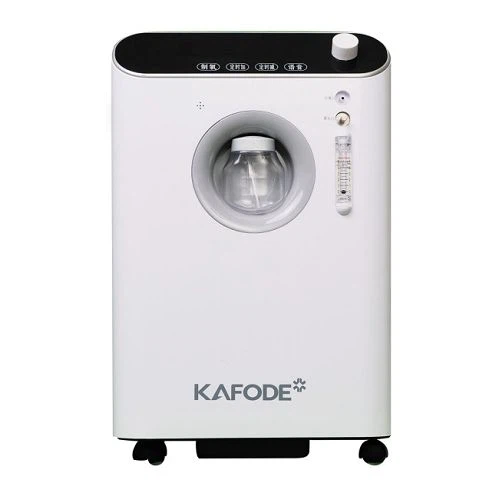
The KAFODE oxygen concentrator has FDA/CE approved certification.
Digital flowmeter adjustable. You can see the real-time oxygen concentration on the screen. The oxygen concentrator is reassuring to use.

KAFODE oxygen concentrator is a very cost-effective oxygen concentrator. Designed for the acquirement of high purity oxygen, it meets the needs of most customers to a great extent.
High bottom wheel design makes the machine convenient to move and carry.

Continuously provide 5L of medical-grade oxygen. It is equipped with a low oxygen concentration alarm function as standard. It is the first choice for the cost-effectiveness of safe oxygen therapy.
Advanced molecular sieve filling technology and cooling technology improve user experience.
Advantages of Household Oxygen Generator
Easy to Use
Many household oxygen generators can be a little confusing to operate. These can make it very challenging to modify your oxygen therapy and will have your device beeping back at you to let you know you're not doing it correctly. This is why it's important to use a device that's user-friendly household oxygen generators. An easy-to-understand and clean control panel will allow you to monitor your liter flow and battery life easily. It will also make adjustments as simple as pressing one button on the touch screen control display. And there are no worries about exasperating battery belts, irritating internal batteries and confusing connectors. Instead, there's a lightweight battery that's very accessible that you can change in just a minute or two.
A Better Night's Sleep
While you're sleeping, your oxygen saturation levels tend to drop, even in individuals with healthy lungs. If you have COPD or another type of chronic lung disease, you may suffer with transient nocturnal desaturation which can interfere in your good night's sleep, leading to substantial health issues. If your sleep is being frequently disrupted, you should consult with your doctor about having an overnight oximetry test performed. They may end up prescribing you supplemental oxygen therapy during sleep, helping you to sleep better.
Mobility
The newest oxygen generators are lightweight and compact as well as very discreet. You can take them with you just about anywhere:
Picnics
Car Rides
Walks in the Park
Baseball Games
Many individuals using a household oxygen generator can work, take part in social events and participate in physical activities. Some household oxygen generators are smaller, weighing only six pounds and being only one foot in height.
Increases Stamina
If you don't have enough energy during your day, it might be because you have low oxygen levels. Oxygen therapy provides you with the stamina you require to perform every day, normal functions like:
Cleaning the House
Getting Dressed
Walking the Dog
Preparing Meals
Improves Mental Alertness
Do you feel like you're always in a mental fog? When you're not getting the oxygen you need, every one of your body's organs are affected; even your brain. The first sign that an individual with lung disease isn't getting enough oxygen is confusion. Supplemental oxygen use helps keep your brain and other important organs healthy.
Independent Lifestyle
Household oxygen generators make independence obtainable. Individuals can often lead energetic and active lives. Machines are made for mobility and carrying cases, wheeled carts and many other accessories are available to make it easier to get around. You can do anything and go anywhere easily because of the battery life. Not to mention, you can have oxygen in any place that has a plug.
Types of Household Oxygen Generator
Pressure Swing Adsorption Oxygen Generator
PSA generators separate nitrogen from ambient air inside a pressurized tank filled with Zeolite. Zeolite is a natural or man-made mineral that acts as a "molecular sieve." It is this ability to "sort" molecules by size that makes zeolite so useful. The larger nitrogen molecules are adsorbed by the sieve material while the smaller oxygen molecules drift past and are collected. Pressure is then released, the nitrogen molecules are vented to the atmosphere, and the tank is pressurized again.
Membrane Oxygen Generator
Membrane oxygen generators us a compressed air stream passed through semi-permeable materials that allow for the passage of specific molecules. Under pressure, smaller oxygen molecules pass through the membrane, filtered out and collected leaving a stream of nitrogen flowing out the opposite end of the membrane. While membrane-type generators are not as common, they are considered to be more reliable because there are no moving parts that can fail.
Chemical Oxygen Generator
A chemical oxygen generator is a device that releases oxygen by a chemical reaction. A container of inorganic salts called "superoxides" or sodium chlorate are ignited. As they heat they give off oxygen until the compound is consumed. Because of their long shelf-life, stability and small size (about the size of a can of soda) chemical oxygen generators are used in commercial airliners. Mounted over the seats, each generator can produce enough oxygen for 2-3 masks for 10-20 minutes.
Components of Household Oxygen Generator


Cannula
The nasal cannula is the thin tube inserted into the nose that delivers airflow, while the other end of the tube is connected to oxygen supply, such as a portable or home oxygen concentrator.
Tubing
With soft plastic, the tube is connected to the nasal cannula or a mask and allows the oxygen to flow from the oxygen concentrator to your nose.
Motor Mounts
A motor mount is a piece of metal that is able to withstand force and torque generated by the operation of the oxygen concentrator. A piece of rubber is used to absorb and dampen the vibrations that the motor produces.
Compressors
These are the oxygen concentrator parts that have two cylinders filled with zeolite pellets, a pressure equalizing reservoir, valves, and tubes. The compressor forces air into the storage tank that increases air pressure and allows for patients to set their air flow.
Humidifier Bottles
These pieces attach to oxygen concentrators to moisten the air. It warms the oxygen and mixes it with water to do so.
Capacitors
Similar to a battery, a capacitor stores and releases electrical energy. These oxygen concentrator parts have two conductors and an insulator between them.
The Cooling Fan
There are AC axial and DC axial fans. DC axial fans use direct current, only moving in one direction. These kinds of cooling fans have a longer life span than AC axial fans and are more affordable. AC axial fans use alternating current changes and can change their direction quickly. They both consist of motors and bearings.
The Power Button
They typically stay illuminated so you can tell if the machine is switched in the on or the off position.
Gross-Particle Air Filter
These oxygen concentrator parts look like a sponge or a mesh screen and can be found on the side or the back of the unit. The concentrator sends the ambient air through a filtration process to produce medical grade oxygen. The ambient air is pumped into the first cylinder, where the very first process where the separating of nitrogen begins taking place. The first chamber then pumps the air into the second cylinder for further refinement.
How Does a Household Oxygen Generator Work?
Air Intake
The oxygen generator draws in ambient air from its surroundings. The air typically contains approximately 78% nitrogen, 21% oxygen, and trace amounts of other gases.
Filtration
The incoming air goes through a series of filters to remove impurities, dust, and other particulate matter. These filters ensure that the oxygen produced is of high quality and free from contaminants.
Compression
After filtration, the air enters a compressor, where it is pressurized. This compression process increases the concentration of oxygen while reducing the concentration of nitrogen and other gases.
Separation
The pressurized air moves into a molecular sieve bed, which consists of zeolite material. Zeolite is a substance with a high affinity for nitrogen. As the air passes through the sieve bed, the zeolite selectively absorbs nitrogen molecules, allowing oxygen molecules to pass through more readily.
Oxygen Collection
The purified oxygen, now separated from nitrogen and other gases, is collected and stored in a reservoir within the oxygen generator.
Delivery
The collected oxygen is then delivered to the user through a flowmeter and a delivery system such as nasal cannulas or a face mask. The flow rate can be adjusted according to the user's prescribed oxygen therapy requirements.
Continuous Operation
Oxygen generators are designed to operate continuously, ensuring a steady supply of oxygen. They often incorporate cycling systems that alternate the adsorption and desorption phases of the molecular sieve bed, allowing for continuous oxygen production.
Individuals with chronic respiratory conditions such as COPD, emphysema, or pulmonary fibrosis primarily use household oxygen generators. However, they can also benefit people with other medical conditions, including asthma, cystic fibrosis, and even certain heart conditions.
For individuals with COPD, household oxygen generators can be a game-changer. COPD is a progressive lung disease that causes airflow obstruction and difficulty breathing. The condition often worsens over time, making it essential for patients to have access to a reliable source of oxygen. household oxygen generators provide a medical-grade flow of oxygen, ensuring that patients receive the necessary support to manage their symptoms and maintain an active lifestyle.
Similarly, individuals with emphysema, a type of COPD, can greatly benefit from household oxygen generators. Emphysema damages the air sacs in the lungs, reducing their ability to take in oxygen and expel carbon dioxide. household oxygen generators can help alleviate the shortness of breath associated with emphysema, allowing individuals to breathe more comfortably and engage in daily activities with less difficulty.
In addition to COPD and emphysema, household oxygen generators are also useful for individuals with pulmonary fibrosis. Pulmonary fibrosis is a lung disease characterized by the formation of scar tissue in the lungs, which hinders their ability to function properly. household oxygen generators can provide relief by delivering concentrated oxygen directly to the lungs, compensating for the impaired oxygen exchange caused by the scar tissue.
Household Oxygen Generators vs. Traditional Oxygen Tanks
While traditional oxygen tanks are still widely used, oxygen generators have gained popularity due to several advantages. Oxygen generators offer a more convenient solution for individuals requiring supplemental oxygen. Unlike traditional oxygen tanks that need frequent refills, generators can generate oxygen continuously, ensuring a steady supply without the need for constant monitoring or replacement.
Moreover, oxygen generators are safer to use compared to traditional oxygen tanks. Oxygen tanks store oxygen in highly pressurized cylinders, which can pose hazards if mishandled. Accidental damage or mishaps can lead to leaks or explosions, putting the user at risk. In contrast, oxygen generators do not involve handling pressurized cylinders, making them a safer option for both patients and caregivers.
Furthermore, the portability of oxygen generators adds to their appeal. Traditional oxygen tanks can be heavy and bulky, limiting mobility and making it challenging for users to travel or move around freely. Oxygen generators, on the other hand, come in various sizes, including portable options that allow users to maintain their active lifestyles without feeling restricted.
Oxygen generators have become an invaluable resource for individuals with chronic respiratory conditions. These devices provide a medical-grade supply of oxygen, improving comfort and overall quality of life. With their convenience, safety, and portability, oxygen generators have proven to be a superior alternative to traditional oxygen tanks, ensuring that individuals can breathe easier and live life to the fullest.
》Take the machine out of the box and place it firmly next to the appropriate socket in the room (do not use other electrical appliances at the same time as the socket of the oxygen concentrator); be at least 15 cm away from walls, fabrics or other objects; make sure that there is no heat source nearby.
》Cut the cable tie. Place the machine horizontally, cut the white tie at the bottom of the body to fix the compressor, and pull the tie from the direction of the knot.
》Sterilize the oxygen tube and humidification cup. For the first time, if the oxygen tube and humidification cup have a peculiar smell, soak them in 1:3 white vinegar and warm water solution for 30 minutes, and then rinse with water to dry.
》Wet a glass of water. Place the oxygen generator vertically, remove the humidification cup, and open the hatch of the humidification cup. Pour 1/3 of distilled or purified water into the cup. It is forbidden to add water, such as unsterilized tap water, which is harmless to human health. Change the water and clean the cup every 3-4 days. After adding water, close the lid to prevent oxygen from escaping.
》Plug in the power cord, press the power button on the back of the machine, and the display will light up.
》Press the "oxygen" button to turn on the oxygen function. During operation, press the "oxygen" button to pause the oxygen function, and then press the "oxygen" button to resume operation. During the operation, press and hold the "Oxygen" button to turn off the oxygen generation function.
》Press the "timer" button to increase the oxygen inhalation time. Each press can increase by 5 minutes. It is recommended that a single oxygen inhalation time should not be too long, 30 minutes each time. The time displayed in the center of the display is the cumulative oxygen generation time of the device, and the time above the display is the current oxygen inhalation time.
》Press the "negative ion" button to turn on the negative ion function. Press the "negative ion" button again to turn off the negative ion function.
》Rotate the flow control valve to increase or decrease the oxygen concentration and gas flow. Rotate the flow valve counterclockwise to increase airflow, and clockwise to decrease airflow. When the black ball is at "1" level, the oxygen concentration is higher than 90%; on the "2" and "3" scales, the oxygen concentration is 80%-60%; on the "4" and "5" scales, the oxygen concentration It is 60%-45%; when the black ball is higher than the "5" level, the oxygen concentration reaches 45%-30%. For general oxygen therapy, it is recommended to set the black ball to level "3".
》Wear an earphone-type oxygen tube or nasal suction oxygen tube. The earphone-style oxygen tube is worn out: connect the larger end of the ear tube to the mouth of the humidification cup lid; connect the smaller end of the ear tube to the port on the earphone; hang the earphone on the ear and take it out to soften the oxygen The tube is unscrewed and bent under the nose, and the small hole at the end of the tube is aligned with the nostril. Wearing the nasal straw: connect the larger port of the straw to the lid of the humidification cup; the two oxygen outlets in the middle of the nasal straw are aligned with the nostrils; the hoses on both sides of the oxygen outlet are hung behind the ears.
》After using the oxygen generator, first press the "oxygen" button to turn off the oxygen, and then press the power switch on the back of the machine to turn off the equipment.
》Unplug the power cord.
Routine Maintenance Tips for Household Oxygen Generators
Cleaning and Replacing Filters
One of your household oxygen generator's most crucial maintenance tasks is cleaning and replacing the filters. Understanding how often to clean household oxygen generator filter is essential. Over time, the filters can become clogged with dust, dirt, and other particles, which can hinder the efficiency of the machine. To clean the filters, gently remove them from the concentrator and rinse them with warm water. Allow them to dry completely before reinserting them. It's recommended to clean the filters at least once a week. However, more frequent cleaning may be necessary depending on the environment in which the concentrator is used. Additionally, it is important to replace the filters as per the manufacturer's instructions. This will ensure that the concentrator continues to deliver clean and purified oxygen.
Checking and Maintaining Tubing
Knowing how often should you change tubing on household oxygen generator is fundamental. Over time, the tubing can develop cracks, kinks, or leaks, which can affect the delivery of oxygen. Regularly inspect the tubing for any signs of wear and tear. If you notice any damage, it's crucial to replace the tubing immediately. Additionally, ensure that the tubing is properly connected to both the concentrator and the oxygen delivery device. Loose connections can result in oxygen leakage, reducing the effectiveness of the treatment. Taking the time to inspect and maintain the tubing will help ensure a consistent and reliable oxygen supply.
Ensuring Proper Airflow
Proper airflow is essential for the efficient functioning of a household oxygen generator. It is important to keep the device in a well-ventilated area, away from obstructions that may restrict the airflow. Ensure that there is enough space around the concentrator for proper ventilation. Avoid placing the concentrator near curtains, furniture, or other objects that could obstruct the air intake or exhaust vents. Additionally, periodically check the vents for any dust or debris buildup. Using a soft, dry cloth, gently wipe away any accumulated dust to maintain optimal airflow. Ensuring proper airflow can help your household oxygen generator operate effectively and efficiently.
Our Factory

Zhejiang Xikang Medical Equipment Co., Ltd is a leading manufacturer specialized in oxygen solutions. Our R&D Team has independent developing ability of the hard & software unit of the product. We produce oxygen concentrators from 1LPM-10LPM, which have been widely applied in homecare, hospitals, clinics, beauty salon, sports and high altitude area etc.
Ultimate FAQ Guide to Household Oxygen Generator
Hot Tags: household oxygen generator, China household oxygen generator manufacturers, suppliers, factory,, Portable Oxygen Nebulizer, Precision Medical Portable Oxygen Concentrator, Portable Oxygen Machine for Home, High Flow Concentrator, Portable Oxygen Concentrator Up To 10 Liters, Household Oxygen Generator
You Might Also Like


Send Inquiry
